The Kirkening Part 3: Kirk as Kurrency
You can’t take your money with you when you're dead, but people can certainly make money off of your death.


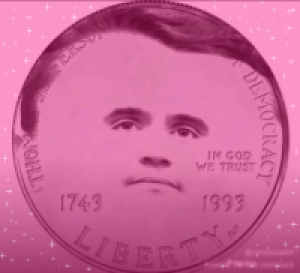
“Never let a good crisis go to waste” said Winston Churchill, probably face-swapped with Charlie Kirk.
hampton and I are wrapping up a handful of blog posts on the online aftershocks of Charlie Kirk’s murder, collectively proving that his death has likely forever changed the online landscape. hampton most recently wrote about how the networked harassment of Kirk’s detractors shows that Gamergate is forever. Prior to that, we both wrote about the Kirkification of the Internet via a new meme format and TikTok psychics claiming to channel Kirk’s spirit from the afterlife.
For this final post in the “Kirkening” series, we discuss the rise of memecoins launched in the wake of staggering acts of political violence — in this case, those launched in the aftermath of Charlie Kirk’s murder and their continued profitability as a result of the aforementioned “Kirkified” meme trends. We, of course, provide some commentary on this trend, but also draw heavily from the work of people more knowledgeable in digital currency trends than us. This includes Ryan Gladwin, whose article (published the day after Kirk’s assassination) details four unique “memecoins” created in response to Kirk’s death that soared to millions in valuations in less than 24 hours. Read his piece here.
The Meme Economy
“Memecoins” are a form of cryptocurrency tied to a specific meme or online joke. As reported by Christopher Beam for Bloomberg, these coins have “no underlying value” beyond the online attention they receive, and therefore often reference current events or contemporary Internet trends. Readers may be familiar with “Dogecoin,” a memecoin founded in 2013 that uses the face of Kabosu, a Shiba Inu and canine Internet icon.
Some memecoins, however, are not based on innocuous online memes and Internet celebrities. In the past few years, cryptocurrency circles have spun out a number of memecoins that reference real-world violence. In July 2024, multiple memecoins were launched in response to the assassination attempt on President Trump’s life, with one reaching a market cap of $450 million. In December 2024, the LUIGI coin launched — named after Luigi Mangione, the alleged shooter of United Healthcare CEO Brian Thompson. More recently, the HERO coin has emerged, referencing the Australian fruit vendor who intervened and disarmed a mass shooter at Bondi Beach.
The profitability of these “violent” memecoins is driven entirely by continued online attention paid towards the violent event they invoke. As a result, at first glance, they may appear as a sort of memorialization of traumatic events, but a deeper look shows that they are, at their core, ploys for cash driven by the Internet’s continued attention towards and fascination with violence. In our minds, no memecoin demonstrates this dynamic between collective trauma, online trends, and money-making more than those launched in the wake of Charlie Kirk’s death.
Our Kirkified Economy
Just hours after Kirk was pronounced dead, three different memecoins referencing his death reached the top 10 trending cryptocurrencies, with one, as Gladwin reported, reaching a baffling $36 million market cap. However, this phenomenon wasn’t limited to these three coins. Bloomberg analysis found that over 10,000 memecoins containing the terms “charlie” or “kirk” were launched in the first week after Kirk’s death.
The initial profitability of these coins was driven by the immediate outrage, attention, and reactions to the shooting. However, the recent rise in “Kirkified” meme trends has likely kept Kirk-related memecoins profitable in the short-term — despite much of this Kirkified content being used and created by critics of Kirk’s legacy (as we have previously discussed). Basically, the more the Internet continues to be filled with Kirkified content, and the more attention is paid to this content (regardless of whether it portrays Kirk in a positive or negative light), the more profitable Kirk-related memecoins become.
Some Internet researchers have gone so far as to attribute the rise of the Internet’s Kirkification to specific Kirk memecoin holders, claiming they created Kirk-related content to ensure the continued profitability of their digital assets. Linguist and content creator Adam Aleksic, for example, alleges that the creator of the KIRKINATOR coin was the first to make the “Kirkinator” meme, in an attempt to ensure continued Internet attention on Kirk’s death and thus the continued profitability of the memecoin. See his video below:
@etymologynerd Why are the platforms rewarding this behavior? #linguistics #memes #culture #charliekirk #kirkified zay's video: @zay 🇭🇹🇩🇴
♬ original sound - etymologynerd
The Controversy Economy
The KIRKINATOR coin introduces us to another facet of memecoin community behavior, in which the community uses outrageous, incendiary, or controversial content to increase the profitability of their digital currencies. As has been repeatedly stated for the last decade, the more controversial an online trend, the more engagement it tends to have. This rings true for memecoins as well, or at least appears to be the logical throughline. There's a reason that the 2025 Oxford Word of the Year is "rage bait."
The face value invocation of Charlie Kirk is controversial enough. If readers recall, the immediate online reaction to Charlie Kirk’s death was immensely punitive towards those who dared make light of Kirk’s killing, or even those who accurately quoted the man. To make a meme portraying Charlie Kirk as a Terminator robot is thus already pretty incendiary. However, a deeper dive into the KIRKINATOR coin and its corresponding meme shows that the specific meme choice for this coin is based on a previously existing memecoin called “FloydAI,” launched in April 2024. The FloydAI memecoin portrays George Floyd as a Terminator robot, and seems to corroborate Aleksic’s assertion that the KIRKINATOR coin’s creator deliberately used racist imagery to increase outrage and engagement with the coin.
This is not the only example of memecoin holders attempting to weaponize outrage and engagement to drive the profitability of their digital holdings. For example, one of the most lucrative Kirk coins, called Justice for Charlie, was almost certainly influenced by the Justice for Iryna coin, which references the death of a Ukrainian woman stabbed to death by a mentally unwell man on public transit in Charlotte, North Carolina (and who became a martyr for racists and well-meaning community members alike). IRYNA, as it was labeled, hit a $33 million cap, with at least one buyer, interviewed by Bloomberg, claiming to have bought Kirk coins with funds previously invested in the Justice for Iryna coin. Thus, there seems to be a whole subset of cryptocurrency partakers who deliberately invest in memecoins associated with real-world violence, and especially violence that is highly referenced in right-wing political circles.
Meme- and vibes-based investment strategies
Memecoins are, at first-glance, the ultimate vibes-based financial investments — there does not seem to be any rhyme or reason to what does and does not make money. To some, it may seem just as sensible as investing money by the moon phase or creating a financial plan based on the Zodiac. Still, there are strategies for increasing engagement and thus the profitability of one’s memecoin investments. Our research suggests that more and more frequently, Internet trends may be driven by cryptocurrency circles that create or contribute to content trends for the sole purpose of making money. In our work researching instances of event-specific memes, members of online cryptocurrency spaces are increasingly attempting to capitalize on emerging meme trends. These users often plagiarize content from others responding to the event in question, frequently using better keywords while replying to viral tweets, all while having their pet coin tagged and indexed in their posts and replies. This ultimately contributes to the broader “enshittification” of the Internet — for the average person interested in seeing other people's responses to recent events, their feed is suddenly inundated with content and replies that reference an event-specific memecoin, and not someone’s joke or take on an event.
Returning to the Charlie Kirk-specific memecoins, these online tokens suggest an increasingly mercenary cryptocurrency space. They likely point towards whatever late stage we’re at in our economic system. For what it’s worth, the sudden rise of Kirk-related memecoins in the immediate aftermath of his death did give some pause to cryptocurrency circles, with some members beseeching others not to immediately capitalize on a man’s very public death. We think, however, that Kirk himself might have approved of this otherwise ruthless manifestation of capitalism. After all, in response to President Trump’s memecoin launch after the attempt on the candidate's life, Kirk said, “He got shot, so he’s allowed to launch a memecoin.” Perhaps that applies to Kirk’s case as well. While you can’t take your money with you when you're dead, people can certainly make money off of your death.