The Kirkening Part 1: "Lil Kirk"
Online, Charlie Kirk is immortal; his death likely changing the online landscape forever — albeit probably not in any manner he would’ve expected.


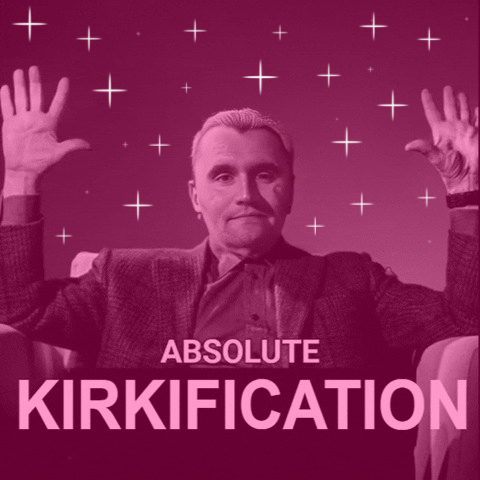
This month, WXQT publications will focus on the recent proliferation of Charlie Kirk-related content online. Welcome to “The Kirkening,” part 1.
Online, Charlie Kirk is immortal; his death likely changing the online landscape forever — albeit probably not in any manner he would’ve expected.
In recent weeks, various social media platforms have been plagued by AI-generated “Kirkified” images — face-swapping the assassinated conservative influencer’s likeness onto older memes, video game characters, laypeople, celebrities, you name it. The magnitude of the Kirkified onslaught has given some users pause — as one TikTok user put it, “Charlie Kirk might have met the worst fate of all time bro, I don’t think I’ve ever seen anything like this in my life.”
According to researchers at Know Your Meme, this type of so-labeled ‘Kirkification’ first began on September 23, when a user on X face swapped Charlie Kirk’s face onto a reaction gif of the popular streamer “IShowSpeed,” (often shortened to Speed). From there, this Kirkified patient zero spread directly to Instagram before the trend migrated to TikTok. Notably, Kirkification began almost two weeks after Kirk was killed, a delayed incubation time compared to previous similar content trends. It’s possible that the targeting, doxing, and firing of people perceived to have made light of Kirk's death in the shooting’s immediate aftermath — the scale of which neither of the two authors has seen in prior online trends — may have led social media users to slow-walk releasing content that could get them harassed, doxed, or fired. Nonetheless, Kirkification is here, and our online lives have unironically changed because of it.
Introducing Lil Kirk
The spread of Kirkification is jaw-dropping. A whole universe of Kirkified content exists that we could delve into. However, for the purposes of our sanity, this article focuses on a sub-category, or specific strain, of Kirkification — Kirk’s likeness being placed onto rap album covers or face-swapped with rappers (see, for example, the three Drake albums below and three other albums further below).
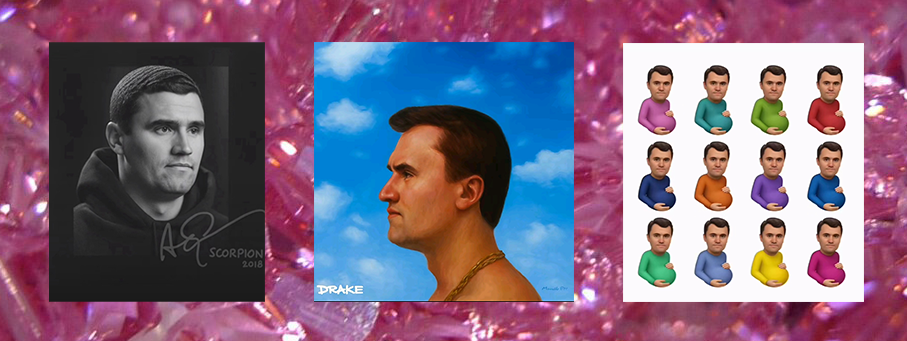
Three examples of “Kirkified” Drake albums, from left to right: Scorpion (2018), Nothing Was the Same (2013), Certified Lover Boy (2021). Notably, the first two album covers Kirk replaces Drake, whereas in the Certified Lover Boy Kirkification, he replaces pregnant female emojis.
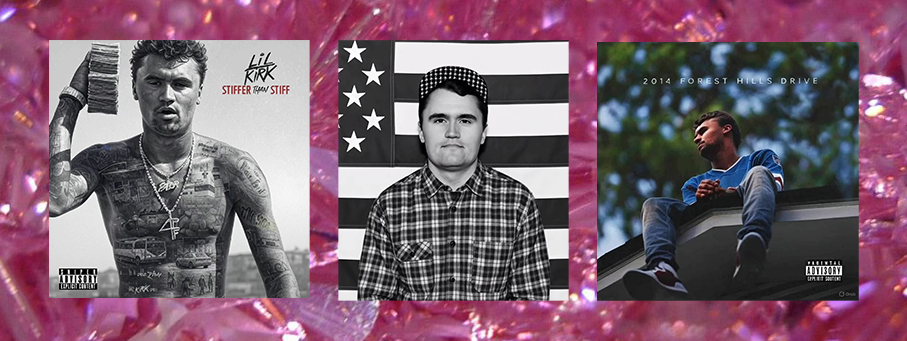
From left to right, “Kirkified” Lil Baby album Harder Than Hard (2017) , A$AP Rocky album Live. Love. ASAP. (2011), and J. Cole album 2014 Forest Hills Drive (2014). In all three instances, Kirk replaces a Black artist.
These albums were the first major strain of Kirkified content the authors encountered and suggests similar social media user behaviors discussed in a previous WXQT article about AI-generated Jake Paul content. Like AI-generated content that portrays Jake Paul as gay, Black, or Hispanic, Kirkified rap album covers are examples of AI-enabled blackface and the subversion of the content’s subject — especially considering the broader role Kirk played in proliferating anti-Black racism.
“He became what he feared”
Kirk’s disdain for Black people, Black culture, and Black cultural production cannot be overstated. When asked about music preferences, he said it was “time to stop listening to rap music, and this degenerate hip-hop stuff, and go back to the music that built our civilization.” His still-operational “Turning Point Professor Watchlist” continues to target Black professors, including A.D. Carson, a hip-hop expert and Black professor who makes rap music. Beyond rap music, Kirk repeatedly parroted racist tropes about DEI, claimed Black people “target” white people, called Dr. Martin Luther King Jr. “awful,” and referred to the Civil Rights Act as “a huge mistake.” The proliferation of Kirkfield rap albums and rappers, therefore, suggests some social media users are attempting to put Kirk literally into the shoes of Black cultural contributors. One user summed this subversion up perfectly — “he became what he feared, a meme for Black people.”
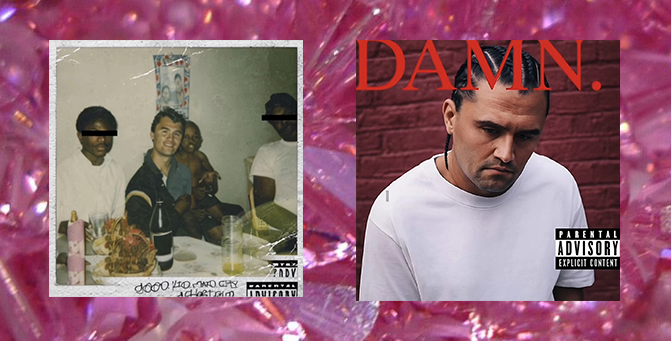
Kirkified Kendrick Lamar albums, Good Kid, mAAd City (2012) at left, DAMN. (2017) at right.
Thus, Kirk’s anti-Black legacy is not lost on social media users. “He’d hate this shit,” said one comment. “Rolling in his grave,” said another. This, however, is obviously the whole point of the joke — Kirk was a particular form of white, known for its hate and disdain for those not like him, so plastering his face on those different than him (in many cases some of the hardest rap album covers) both inverts expectations and pisses people like him off. The few users reprimanding those posting Kirkified content (often claiming that portraying him as a rapper is “disrespectful”) were broadly clowned on by other users — “SYBAU” or “shut your bitch ass up” being a popular response.
We are Charlie Kirk
Kirk, unlike most of the people posting or commenting on these goofy image edits on social media, had real access to power. He had the ear of the President, could influence broad swathes of the American right with a pedantic comment made on a faraway campus, and literally created watchlists for his ideological enemies. All that power and his subsequent death, however, have not led to large offline changes — his enemies have not yet been vanquished and people still protest at his organization’s events. Online, however, he is anyone and anything, whatever AI users wish. His death and the subsequent Kirkification of the Internet are thus simply harbingers of what now happens when celebrities die in the generative AI age, but what’s one more indignity before eternity. And, through it all, it is maybe worth remembering (but not internalizing) that when it comes to empathy, Kirk himself said: “I can’t stand the word ‘empathy,’ actually. I think empathy is a made-up, New Age term that — it does a lot of damage, but it is very effective when it comes to politics. Sympathy, I prefer more than empathy.”